
Specialty Contact Lenses Near You – El Paso

Are you tired of the limitations of traditional contact lenses? Are you searching for a solution that combines comfort, functionality, and style? Look no further! At Vision Source El Paso – East, we specialize in providing a wide range of specialty contact lenses to meet your unique visual needs and preferences.

Specialty contact lenses are custom-made contact lenses designed to address specific visual needs and conditions for patients that traditional eyeglasses and disposable contact lenses cannot correct.

We offer many different types of specialty contact lenses that are each designed to address specific eye conditions and can provide a range of benefits, like improving vision clarity, reducing visual distortions, and providing comfort for people with certain eye conditions.

Vision Conditions Treated with Specialty Contact Lenses:

Whether you have astigmatism, presbyopia, or other complex vision issues, our specialty contact lenses offer a customized solution to help you see the world with clarity. We understand that every eye is different, and our team of experienced optometrists will work closely with you to find the perfect fit for your eyes.

Vision Conditions We Treat:

irregular-corneas

Irregular Corneas

Patients with irregular corneas, such as those with keratoconus, post-surgical corneas, or corneal scars

high-refractive-errors

High Refractive Errors

Patients with high levels of nearsightedness or farsightedness

astigmatism

Astigmatism

Patients with astigmatism have an irregularly shaped cornea or lens, which causes blurry or distorted vision.

presbyopia

Presbyopia

Patients with presbyopia have difficulty seeing objects up close due to a natural age-related change in the eye's focusing ability.

dry-eyes

Dry Eye

Patients with dry eye syndrome may require specialty contact lenses that are designed to retain moisture and provide increased comfort.

Specialty Fit Contact Lenses

Post-surgical Correction

Patients who have had LASIK, PRK, or other refractive surgeries may require specialty contact lenses to correct residual refractive errors or other vision issues.

Clinic Hours

Monday – Tuesday
Wednesday
Thursday- Friday
Saturday
Sunday

Book An Appointment

Why Choose Vision Source for Specialty Contact Lenses?

Comprehensive Process that Prioritizes Comfort

Comprehensive Process that Prioritizes Comfort

Dr. Alvarez will perform a series of examinations and assessments to ensure the best possible fit and function of your contact lenses. We prioritize your comfort above all else, and our specialty contact lenses are crafted with advanced technology and precise fitting so you'll experience all-day comfort without the hassle of dryness, redness, or irritation.
Specialized Equipment & Experience

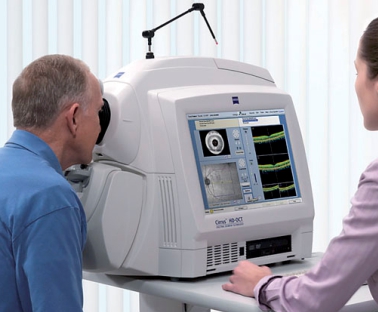
Dr. Alvarez is one of the few optometrists in the El Paso area that offers specialized equipment and experience, such as the EIDON system, Essilor WAM700+, and Zeiss Cirrus HD OCT. This equipment offers much more thorough eye examinations and assessments of your eye health when determining the most suitable specialty contact lenses for you.

Decades of Experience

Dr. Alvarez is regarded as a top expert for specialty contact lenses in the greater El-Paso, TX area. She serves patients in El Paso, Las Cruces and Juarez by providing extensive knowledge and experience in developing specialty contact lenses to address a wide variety of conditions and cases for her patients. Dr. Alvarez has over 25 years of experience as a trusted, local optometrist specializing in specialty contact lenses.
Types of Specialty Contacts We Offer

These lenses are designed to correct astigmatism, which is a condition that causes blurred vision due to an irregularly shaped cornea, as they have different powers in different meridians, correcting the astigmatism and providing clear vision.

These lenses are larger than regular contact lenses and are designed to cover the entire sclera, or white part of the eye. They are often used to treat severe dry eye or other corneal irregularities because they cover the entire cornea, providing more stable and consistent vision.

These lenses are made from a hard, durable material and are often used to correct high levels of nearsightedness, farsightedness, and astigmatism.

These lenses combine the best of both soft and rigid lenses, providing the comfort of a soft lens with the visual clarity of a rigid lens. They are often used to correct keratoconus, a condition that causes the cornea to bulge and become thin.

These lenses are designed specifically for a patient’s unique eye shape and prescription. They are often used to treat conditions that cannot be corrected with traditional contact lenses, such as irregularly shaped corneas or high levels of astigmatism.

Specialty contact lenses can improve vision and comfort for patients with specific eye conditions, allowing them to see clearly and perform daily activities without limitations.

To determine the right type and lens for your unique needs requires a thorough eye exam and fitting by an eye care professional as improperly fitted/prescribed lenses can cause discomfort, vision problems, and even damage to the eye.

The Process of Getting Specialty Contact Lenses

Step 1 - Initial Consultation & Exam

The first step is to schedule an appointment with Dr. Alvarez. She will discuss your vision needs and any issues you may be experiencing with your current contact lenses or glasses. Then, a series of exams and tests will be conducted.

After the results have been analyzed, Dr. Alvarez will offer recommendations based on eye condition, prescription, fit and comfort, lifestyle, and budget.

Step 2 – Contact Lens Fitting

This process involves taking precise measurements of your eyes and then evaluating the fit, comfort level, and effectiveness of the recommended specialty contact lenses.

Step 3 – Trial Period

After the contact lenses are prescribed, a trial period of several days or weeks is established to ensure lenses continue to be comfortable and provide the desired vision correction.

During this time, follow-up appointments can be scheduled to ensure the proper fit, form, and function of your new specialty contact lenses. 

trial-period

Step 4 – Ongoing Care

Receiving regular eye exams and follow-up care from your eye doctor is important to continue after being fitted for specialty contact lenses to evaluate overall vision and to identify and address any areas of concern or improvements available.

ongoing-care

Frequently Ask Questions

Regular lenses are typically used for common vision correction, while specialty lenses are tailored to manage complex or unique eye conditions, providing enhanced vision, and comfort.

Specialty contact lenses can correct various eye conditions, including: astigmatism, keratoconus, irregular corneas, age-related vision loss, post-surgical vision correction, corneal scarring, and corneal dystrophies.

Often, specialty contact lenses can be a suitable option for individuals with dry eyes, and some specialty lenses are designed to retain moisture and provide better hydration to the eyes. It’s essential to consult with an eye care professional to determine the most appropriate lens type and discuss additional dry eye management strategies if needed.

Depending on the specific lens type and your eye condition, it may be possible to wear specialty contact lenses during sports or exercise. Rigid gas permeable (RGP) lenses or scleral lenses, for example, can offer stable vision and are less likely to dislodge during physical activities. However, it's important to discuss your needs with your eye care professional to ensure the best solution for your situation.